.png)
A Saudi actor's portfolio in 2026 needs three image types: a tight headshot (chest-up, eyes to lens, neutral expression), a full-body shot (relaxed posture, neutral wardrobe, plain backdrop), and a range set (3 expressions × 3 wardrobe contexts). Shoot in color, not black-and-white — Saudi casting briefs are color-driven. A clear phone photo is fine to start; a professional Riyadh or Jeddah session helps later, and its cost depends on what the package includes (Section 7). Update every 12–18 months or after any major appearance change. Profiles are often passed over at first glance — usually because of the same five mistakes covered in Section 9. This guide is the document I wish every actor read before submitting to Mr Casting KSA.
Every week, between Riyadh and Jeddah, I review actor submissions for casting calls — corporate films, Ramadan campaigns, documentaries, event hosting, TVCs, product launches. The submissions I open first are not the ones with the best résumés. They're the ones with the right photographs.
Casting in Saudi Arabia in 2026 is visually fast. A casting brief can land in the morning and need a shortlist for client review the same day. That first filtering is quick. If your headshot is dark, your full-body is in your bathroom mirror, or your range shots are three identical photos, your profile is easy to pass over. Not because the casting director is harsh, but because that's the bandwidth a real shortlist allows.
This article is the practical, no-flattery guide to building an actor portfolio that survives that filter. It covers the headshot specifications I actually look for, the full-body framing that signals a professional, the range shots that prove versatility, the photographer choices that don't waste your money, and the five mistakes that disqualify you before I ever read your name.
In this article
- 1. What Casting Directors Actually Look For in 30 Seconds
- 2. Headshot Specs: Framing, Lighting, Expression
- 3. Color vs Black-and-White — The Saudi Standard
- 4. Full-Body: Posture, Wardrobe, Neutral Background
- 5. Range Shots — 3 Expressions × 3 Wardrobe Contexts
- 6. Photographer Choice — Riyadh & Jeddah
- 7. What Drives the Cost — and What to Refuse to Pay For
- 8. Updating Frequency — Every 12–18 Months Minimum
- 9. The 5 Mistakes That Disqualify You Instantly
- A Personal Note — and How I Can Help You Directly
- Frequently Asked Questions
1. What Casting Directors Actually Look For in 30 Seconds
When a casting director opens your profile, four things are evaluated almost simultaneously. They are not subjective — they're trained pattern recognition. Understanding what we look for is the first step to building a portfolio that gets through.
- Eye connection. The first half-second is your eyes. If they're cropped low, looking past the lens, hidden behind heavy glasses, or shadowed by harsh top-light — the brain registers "no contact" and moves on. Strong eye connection is non-negotiable for the lead headshot.
- Skin clarity and lighting truth. We need to see your actual skin tone, your actual face structure, your actual age range. Heavy retouching, beauty filters, ring-light flattening, and Instagram-style smoothing all read as "this isn't what shows up on shoot day." That kills bookings.
- Framing discipline. A headshot is chest-up. A full-body is feet-to-head. A medium shot is waist-up. When these are inconsistent — half-body, weird crops, tilted angles — the profile reads as untrained. Professional actors deliver standard frames.
- Type clarity. Within three frames, I should be able to type-cast you: lead, character, comic, romantic, authoritative, youthful, paternal, presenter. If your photos send mixed signals — a hyper-serious headshot followed by a beach selfie — I lose the ability to pitch you to a client. Clarity beats variety at the top of the portfolio.
These four signals decide whether I open your full résumé or close the tab. Everything else in this article exists to optimize them.
2. Headshot Specs: Framing, Lighting, Expression
The headshot is the single most important image in your portfolio. It is the thumbnail. It is the cover. It is the image that loads first in our internal database. Get it wrong, and the rest doesn't matter.
2.1 Framing
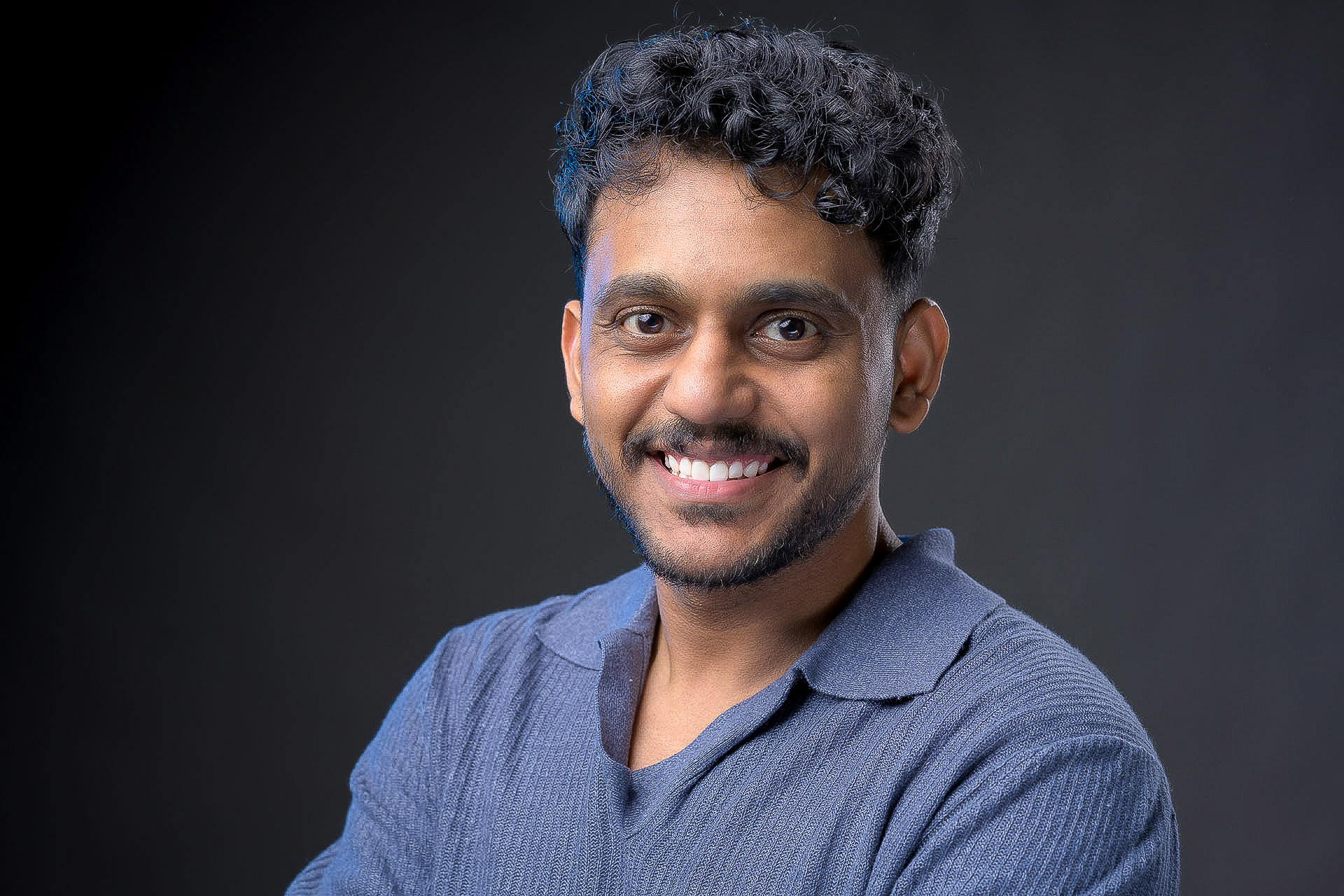
The standard professional headshot frame is chest-up to top-of-shoulders, with the eyes positioned in the upper third of the frame. Crop above mid-chest. Do not include hands. Do not include props. The face occupies roughly 50–60% of the frame. Vertical orientation reads better in casting platform thumbnails; if shooting horizontal, allow space to crop down.
2.2 Lighting
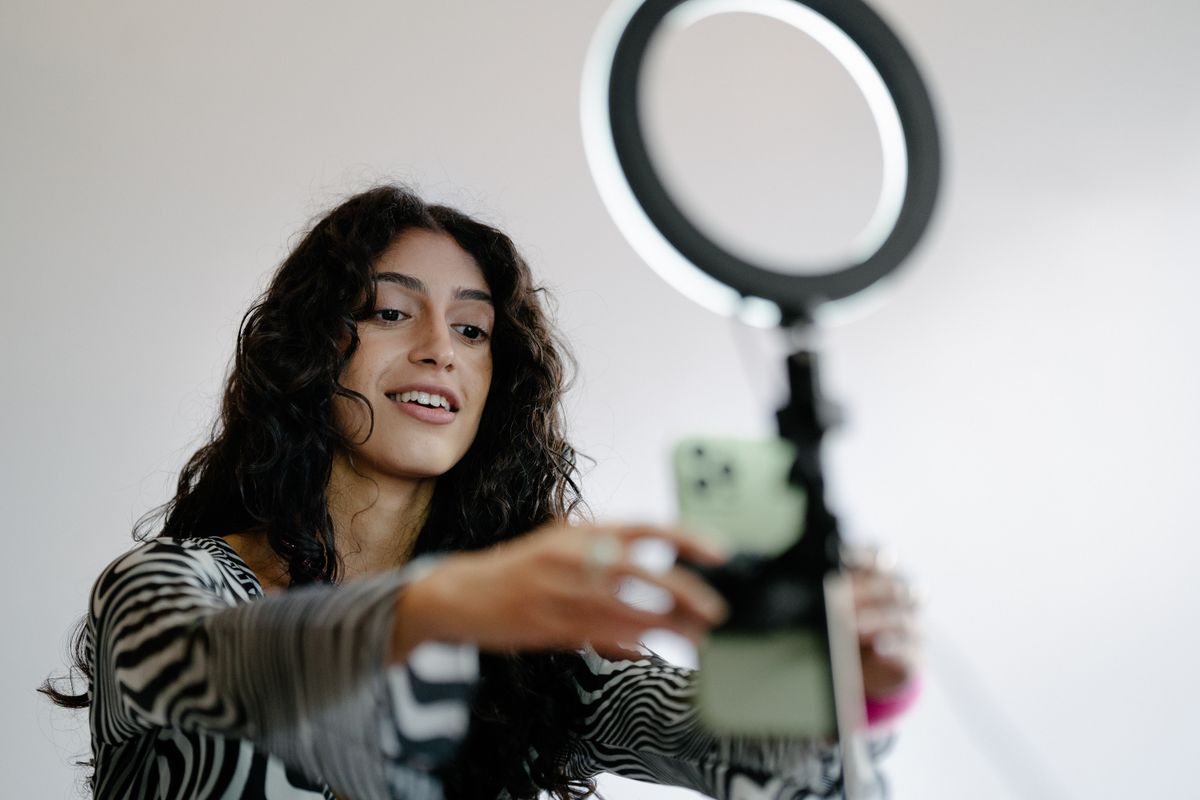
Use soft, frontal key light at roughly 45 degrees to the face — typically a softbox, large diffuser, or window light on an overcast day. Avoid harsh top-light (raccoon eye shadows), bottom-light (horror movie effect), and direct sun (squinting, hot spots, blown-out highlights on the forehead and nose). Avoid heavy ring-light fills — they flatten facial structure and make every actor look the same.
2.3 Background
A clean, neutral, slightly out-of-focus backdrop in warm grey, soft beige, off-white, or muted blue-grey works for the Saudi market. Avoid: brick walls (overused on Instagram), beach scenes, your office, your car, restaurant interiors, anything textured or branded. The backdrop should not compete with your face. Outdoor headshots in soft natural shade can work if the background is genuinely neutral and unbusy.
2.4 Expression
Lead with a neutral-warm expression — relaxed mouth, alive eyes, a faint suggestion of a smile rather than a forced grin. The neutral headshot lets a casting director project multiple character types onto your face. Big smiles narrow your range and read as commercial-only. You can include one alternate "smile" version in your range set, but the primary headshot stays neutral-warm.
2.5 Wardrobe
Solid colors. No logos. No graphic prints. No bright clashing patterns. Neutral, well-fitted, slightly textured — a plain crew-neck, a fitted shirt, a simple jacket. For Saudi female talent, the same principles apply across hijab and non-hijab presentations: neutral solid color, clean line, no busy patterns. Wardrobe should support the face, not steal from it.
3. Color vs Black-and-White — The Saudi Standard
There is a recurring debate, especially among actors who've imported their visual reference from older Hollywood or theatre culture: should the headshot be color or black-and-white?
For the Saudi casting market in 2026, the answer is color. Always color. Black-and-white is a stylistic choice from a different era and a different industry, and submitting it for commercial casting in Saudi Arabia signals one of two things — neither helpful: either the actor is unfamiliar with current market expectations, or they're trying to hide skin tone and color characteristics that the casting brief specifically needs.
Saudi casting briefs are color-driven. Clients ask for specific skin tones, hair colors, eye colors. Brand wardrobe palettes are defined in colors. A black-and-white headshot strips out information the casting director needs at first glance. If your image cannot answer "what does this person actually look like in life?" — it fails the filter.
There is one narrow exception: editorial fashion campaigns occasionally request black-and-white range shots. These come with explicit casting briefs that ask for them. For your evergreen portfolio, default to color.
4. Full-Body: Posture, Wardrobe, Neutral Background
The second mandatory portfolio image is the full-body shot. This is where many portfolios fall apart, because the full-body is often a mirror selfie or a vacation photo. Replace both with a clear full-length photo against a plain background, taken by someone else. A phone is fine to start.
4.1 Framing
Top of head to feet, fully visible, with the actor occupying the central two-thirds of the frame. Vertical orientation. Camera at roughly chest-height — not low-angle (distorts proportions), not high-angle (shrinks the body). The actor is standing naturally, weight slightly on one leg, arms relaxed at the sides or one in a pocket. No leaning poses. No model-style hand-on-hip unless that's a specific commercial type you're submitting for.
4.2 Wardrobe
Same principles as the headshot, extended: solid neutral colors, well-fitted, no logos, no busy patterns. The casting director needs to see your actual silhouette, your actual height, your actual frame. Loose oversized clothing hides that information and makes you harder to cast. For male talent: a fitted plain t-shirt or buttoned shirt with neutral trousers. For female talent: a clean fitted top with neutral bottoms, abaya silhouette where the actor's casting type calls for it. Footwear should be neutral and unbranded.
4.3 Background
The same rule as the headshot: plain, neutral, uncluttered. A studio cyclorama, a clean wall, soft outdoor shade against a non-distracting backdrop. Avoid: doorways, parking lots, your apartment, busy streets, palm trees, sunsets, cafés. The background's only job is to disappear so your silhouette reads cleanly.
4.4 What this shot proves
The full-body shot answers questions the casting director can't ask out loud: What is your real height? Are you proportional? Do you carry yourself with presence? Can you stand still and be watched? A confident, relaxed, well-lit full-body image matters most for non-speaking roles, background hero placements, and lifestyle campaigns.
5. Range Shots — 3 Expressions × 3 Wardrobe Contexts
Once the headshot and full-body are locked in, the third tier of the portfolio is the range set. This is where you prove versatility — and where most Saudi actors over-deliver in the wrong direction. The goal is not "as many photos as possible." The goal is three expressions across three wardrobe contexts — nine images maximum, ideally six.
5.1 The three expressions
- Neutral-warm — your default casting expression, mirroring the lead headshot. This is your baseline.
- Open / approachable — a relaxed half-smile or full smile, eyes engaged. This is your commercial casting face.
- Authoritative / serious — calm strength, jaw settled, eyes direct. This is your corporate, drama, and presenter face.
Avoid: comedy faces, exaggerated emotions, "actor showcase" expressions. Casting directors cast intent and presence — not theatrical exercises.
5.2 The three wardrobe contexts
- Casual — plain t-shirt, simple top, jeans or neutral trousers. Lifestyle and consumer-brand casting.
- Smart casual / business casual — buttoned shirt, blazer, neat dress. Corporate, banking, tech, and white-collar role casting.
- Elevated / formal — suit, formal abaya, ceremonial wear. Premium brand, government, and high-end campaign casting.
Each wardrobe context can pair with one or more expressions. A clean range set does not need every combination — it needs visual proof that you can shift register without changing identity. The face stays you; the context changes around it.
5.3 What kills the range set
The most common failure: nine photos that all look identical. Same lighting, same background, same angle — only the shirt changes. That doesn't prove range; it proves you sat for one shoot and rotated tops. A real range set varies wardrobe, context, and expression — while keeping technical quality consistent.
6. Photographer Choice — Riyadh & Jeddah
The photographer you book determines whether your investment becomes a working portfolio or a set of unusable images. There are three things to look for, and three things to avoid.
6.1 What to look for
- Casting and acting headshot specialization. Not wedding photography. Not Instagram fashion. Not corporate LinkedIn. The photographer should have a portfolio that visibly serves the casting market — neutral backdrops, consistent framing, multiple actors with comparable polish across their gallery.
- Studio with controlled lighting. A real headshot studio has color-accurate softboxes, neutral seamless backdrops, and consistent output. Window-light shoots can work for stylized shots, but the bread-and-butter casting headshot needs studio control.
- Actor-specific direction. A good headshot photographer directs micro-expression — eye direction, jaw tension, breath, micro-smile. If they only direct you to "look at the camera," they're not a casting photographer; they're shooting LinkedIn.
6.2 What to avoid
- The photographer who delivers 200 unedited RAW files and calls it a "complete package." A casting portfolio needs 10–20 fully retouched, color-corrected images, not a 4-gigabyte folder.
- The photographer who heavily retouches skin. Your headshot must look like your face on shoot day. If retouching changes your nose, jawline, or skin texture, casting directors recognize it instantly — and lose trust.
- The photographer charging by the hour without a defined deliverable. Always book a flat-fee package with clear output: number of looks, number of final retouched images, file format, usage rights.
6.3 Riyadh and Jeddah recommendations
Both Riyadh and Jeddah have established acting headshot studios in 2026. Mr Casting KSA does not maintain affiliations with specific photographers — we recommend based on output quality, not commercial relationship. I am happy to share three current studio recommendations directly with talent who register on our platform — one in Jeddah, two in Riyadh — based on their casting type and budget. The list rotates as quality shifts. Contact us for the current short list.
7. What Drives the Cost — and What to Refuse to Pay For
The cost of a professional portfolio shoot varies from one photographer to another, so compare what each package includes rather than the headline price. These are the things that move it:
| Cost Driver | What to Check Before You Book |
|---|---|
| Shots included | Headshot only, or headshot + full-body + range set |
| Looks and wardrobe changes | How many looks the session covers |
| Final images and retouching | How many final images you get, retouched for skin and color only |
| Studio or location | One studio setup, or several setups and locations |
| Extras | Hair and makeup artist, wardrobe consult, faster delivery |
| Photographer's casting experience | A portfolio that clearly serves the casting market (Section 6) |
Ask for the package in writing before you book: number of looks, number of final images, file format and delivery time. And remember: a clear, recent phone photo is enough to register. A professional shoot helps later — it isn't required to start.
7.1 What you should refuse to pay for
- "Submission fees" disguised as portfolio packages. A photographer who tells you a portfolio shoot includes "guaranteed agency placement" is selling something a real photographer cannot deliver. Registration with Mr Casting KSA is free. Any agency or photographer claiming "submission fees" or "registration packages tied to photoshoots" is misaligning incentives.
- Heavy upsells on retouching beyond skin and color correction. Body reshaping, face restructuring, hair transplantation in Photoshop — none of these belong in a casting headshot. They make your image lie.
- Print packages. In 2026, casting in Saudi Arabia runs digitally. You don't need printed 8x10 cards. A photographer pushing physical print packages is reselling outdated workflow.
- Hourly billing with no deliverable cap. Always book a flat-fee package with explicit output count.
8. Updating Frequency — Every 12–18 Months Minimum
The portfolio is not a one-time investment. It is a maintained asset. The Saudi market in 2026 expects current images — and outdated headshots actively damage your booking rate.
8.1 The 12–18 month rule
Refresh your headshot and full-body shots every 12 to 18 months at minimum, even if your appearance hasn't materially changed. Recent photos show how you look now — which is exactly what the casting team and the client need to see.
8.2 Trigger events that require an immediate update
- Noticeable weight gain or loss
- Significant haircut or hair color change
- Adding or removing a beard, especially for male talent
- Ageing-into a new casting bracket (mid-20s to late-20s, late-20s to 30s, etc.)
- Visible change in skin tone after extended sun exposure or seasonal shift
- Any cosmetic procedure that visibly alters the face
Submitting an outdated headshot when you've changed materially is one of the fastest ways to lose a client's trust. The shoot day reveal — when the talent walks in not matching their submission photos — is one of the most damaging moments for an actor's reputation in this market.
9. The 5 Mistakes That Disqualify You Instantly
These are five common reasons a profile gets passed over at first glance. None of them are about acting talent. All of them are fixable in your next photo session — for free, if you simply know to avoid them.
Mistake 1: Mirror shots and arm's-length selfies
A bathroom mirror selfie, a phone-held arm's-length shot, or a car interior selfie hides your real face and proportions, and usually comes with poor light. You don't need a professional shoot to fix this. A phone is fine to start: ask someone else to take the photo, face a window for natural light, stand against a plain wall, and skip the filters. A clear, recent selfie is accepted, but it looks less professional; mirror and arm's-length shots should be replaced. A professional shoot helps later, when you're ready to invest in one.
Mistake 2: Heavy filters and beauty smoothing
Instagram filters, Snapchat smoothing, FaceTune reshaping, ring-light flattening — all of these strip the face of the texture, structure, and character that casting directors actually need to see. The casting director cannot pitch a filtered face to a client because the filtered face will not show up on shoot day. We pitch the version we believe walks in the door.
Mistake 3: Wrong framing — half-body, weird crops, tilted angles
Submitting a "headshot" that's actually waist-up, or a "full-body" cropped at the knees, or a tilted-angle "artistic" shot signals the actor doesn't know the standard frames. Standard frames exist because casting directors compare many profiles quickly. Non-standard frames break that comparison and force the casting director to do extra work, which makes the profile easier to pass over.
Mistake 4: Busy or branded backgrounds
A Starbucks logo behind your shoulder. A car dealership lot. A wedding hall. Brick walls. Sunset beach. These backgrounds compete with your face and immediately date the photo to the moment it was taken. Casting needs timeless, neutral, uncluttered backgrounds. If a casting director can identify the location of your headshot, the background is too busy.
Mistake 5: One photo only
Submitting a single photo — even a great one — signals that the actor either does not have a portfolio or did not bother to submit it. To start, 3–4 clear photos are enough: a front headshot, a full-length photo, and one other angle or look. Quality matters more than quantity, but a single photo leaves the casting team guessing.
Fix these five, and you remove the most common reasons a profile gets passed over.
A Personal Note — and How I Can Help You Directly
A working portfolio opens the door. What happens after — the audition, the chemistry read, the booking — is craft. But the door has to open first, and these images are the key. If you've followed the specifications in this guide, your headshot is sharp, your full-body is clean, your range is honest, and your photos are recent — your portfolio is already doing its job.
Here's something I want every Saudi actor reading this to know: I'm available to help you directly. Not in a transactional way — not as a paid consultation, not as an upsell, not as an "agency package." Simply because the Saudi industry is still maturing, and I've spent eight years learning what makes the difference between an actor who books and one who doesn't. If I can shorten that learning curve for you with a five-minute look at your portfolio, I want to do it.
Specifically, here's what I'm happy to do for serious talents:
- Review your headshots before you submit them. Send me 3–5 of your strongest images. I'll tell you, in plain language, whether they pass a first look — and if not, what specifically to change before your next shoot.
- Share my current short list of recommended Riyadh and Jeddah headshot photographers. One studio in Jeddah, two in Riyadh, refreshed quarterly based on output quality. No affiliations, no kickbacks — just photographers I'd send my own talents to.
- Tell you which casting type fits you best. Many actors mis-cast themselves at the start of their career. Five minutes with the right framing can save years of submitting for the wrong roles.
- Answer one direct question about the Saudi market — pricing, audition norms, dialect choice, agency etiquette. Whatever's blocking you.
The fastest way to reach me is by email at Badr@mrcastingksa.com or DM on Instagram. Keep your message short, attach your photos, and tell me what you're trying to figure out. I read every message myself. I won't always reply within 24 hours — Riyadh and Jeddah keep me busy — but I do reply.
For the structured next steps, the rest of our talent guidance library is here:
- Career foundation: How to Become an Actor in Saudi Arabia — the full path from first headshot to first booking.
- Audition craft: The Saudi Audition Guide — What Casting Directors Want to See.
- Self-tape capability: Self-Tape Tutorial — The Saudi Standard.
- Or register directly: Learn about Mr Casting KSA and submit your profile through our talent portal.
Build the portfolio right the first time and you won't need to rebuild it for 18 months. That's a small investment for an asset that determines whether you're in the casting room or not. Whenever you're ready — I'm here. Get it done.
Frequently Asked Questions
What does an actor portfolio in Saudi Arabia need to include in 2026?
A complete actor portfolio for the Saudi market in 2026 includes three image types: a tight chest-up headshot with neutral expression and direct eye connection, a full-body standing shot against a neutral background, and a range set of 6–9 images covering three expressions across three wardrobe contexts (casual, smart casual, formal). All images should be in color, professionally lit, and shot within the last 12–18 months.
How much does an actor headshot session cost in Riyadh or Jeddah?
It depends on the package, so compare what is included rather than the headline price. The main cost drivers are the shots included (headshot only, or headshot, full-body and range set), the number of looks, the number of final retouched images, studio or location setups, and extras such as a hair and makeup artist or faster delivery. A clear, recent phone photo is enough to register; a professional session helps later.
Should my actor headshot be in color or black-and-white for Saudi casting?
Color. Always color for the Saudi casting market. Black-and-white headshots strip out skin tone, hair color, and eye color information that casting directors use to match talent to brand briefs. Saudi casting briefs are color-driven. Black-and-white is reserved for occasional editorial fashion campaigns that explicitly request it.
How often should I update my actor headshots?
Update your headshot and full-body portfolio every 12 to 18 months at minimum. Update immediately after any noticeable weight change, significant haircut or color change, beard addition or removal, age-bracket transition, or any visible cosmetic alteration. Recent photos show how you look now.
Can I submit selfies or phone photos for Saudi casting?
Yes, to start. A phone photo is fine, ideally taken by someone else, facing a window for natural light, against a plain background and with no filters. A clear, recent selfie is accepted but looks less professional, and mirror or arm's-length shots should be replaced. A professional shoot helps later; it isn't required to register.
What is the correct framing for an actor headshot?
A standard professional actor headshot is framed chest-up to top-of-shoulders, with the eyes positioned in the upper third of the frame and the face occupying 50–60% of the image. Crop above mid-chest, exclude hands and props, and orient vertically for optimal display in casting platform thumbnails.
What expression should I use for my main headshot?
Use a neutral-warm expression — relaxed mouth, alive eyes, a faint suggestion of a smile rather than a forced grin. Neutral expressions allow casting directors to project multiple character types onto your face. Big commercial smiles narrow your range. Reserve smile and other expression variants for the range set, not the lead headshot.
What wardrobe should I wear for my casting portfolio?
Wear solid neutral colors with no logos, no graphic prints, and no busy patterns. Choose well-fitted pieces with subtle texture: a plain crew-neck, a fitted shirt, a simple jacket. For Saudi female talent, the same principles apply across hijab and non-hijab presentations. Wardrobe should support the face without competing with it.
How many photos should an actor portfolio contain?
To register, a starter set of 3–4 clear photos is enough: a front headshot, a full-length photo, and one other angle or look. A full professional portfolio usually grows to 10–20 final retouched images: one lead headshot, one to two alternate headshots with different expressions, one full-body shot, and a range set of six to nine images covering three expressions across three wardrobe contexts. A single photo leaves the casting team guessing.
Does Mr Casting KSA charge actors to submit their portfolio?
No. Registration with Mr Casting KSA is free. Any agency, photographer, or platform charging "submission fees" or bundling photoshoots with "guaranteed placement" is misaligning incentives and should be avoided.
What background should I use for my actor headshot in Saudi Arabia?
Use a clean, neutral, slightly out-of-focus backdrop in warm grey, soft beige, off-white, or muted blue-grey. Avoid brick walls, beaches, restaurants, your office, your car, sunsets, and any branded or busy environment. The background must disappear so the face reads cleanly. If a casting director can identify where the photo was taken, the background is too busy.
Can I use heavy retouching or filters on my actor headshot?
No. Heavy retouching, beauty filters, body reshaping, and face restructuring strip out the texture and structure casting directors need to see. More importantly, they make your photo not match your appearance on shoot day — which damages trust with the casting team and the client. Color correction and minor blemish cleanup are acceptable. Anything beyond that is harmful.
Do I need to print my headshots for Saudi casting in 2026?
No. Casting in Saudi Arabia in 2026 runs digitally. Submissions, shortlists, callbacks, and client reviews run through casting platforms and digital file sharing. Photographers offering "print packages" are reselling outdated workflow. Invest your portfolio budget in additional looks or higher-quality retouching instead.
Can Mr Casting KSA recommend a headshot photographer in Riyadh or Jeddah?
Yes. Mr Casting KSA maintains an unaffiliated, regularly rotated short list of recommended headshot photographers — currently one in Jeddah and two in Riyadh — based on output quality and price tier rather than commercial relationship. Registered talents can request the current short list directly. Contact us via the talent registration portal or email Badr@mrcastingksa.com.